
CJP Leaders Saurav Das, Ashutosh Ranka Sent To Tihar Jail For Five Days Over Jantar Mantar Protest
Cockroach Janta Party (CJP) leaders Saurav Das and Ashutosh Ranka were sent to Tihar Jail for five days on Wednesday after allegedly entering Jantar Mantar without authorisation and violating peace bonds, according to police sources. Their associate, Ajinkya Shinde, was allowed to leave after signing a fresh peace bond.
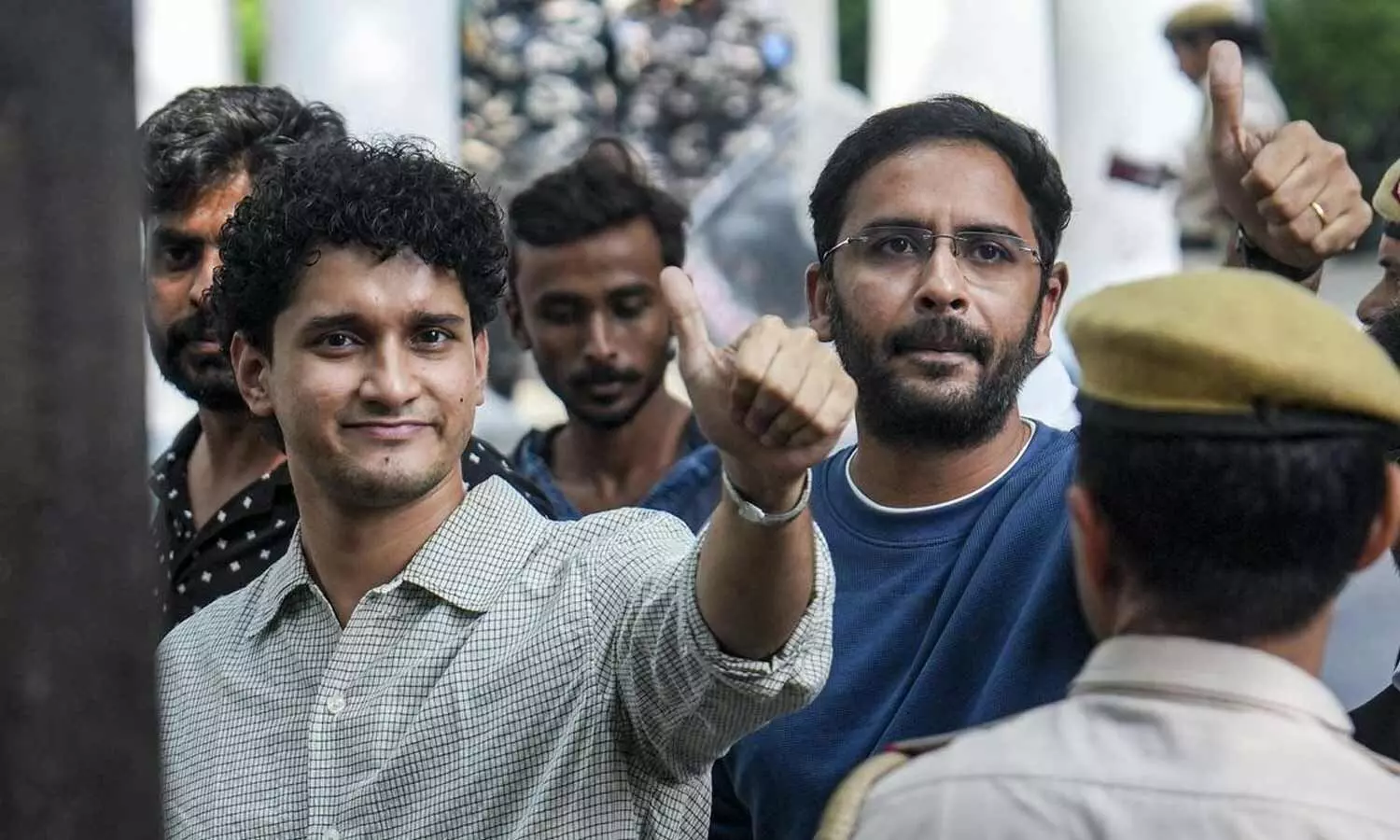
The three leaders were produced before a Special Executive Magistrate (SEM), who sent Das and Ranka to judicial custody while permitting Shinde to walk free after completing the required formalities.
The detentions come amid the CJP’s protests against alleged irregularities in the Special Intensive Revision (SIR) of electoral rolls and the recent removal of Jantar Mantar from Delhi’s list of designated protest sites.
Police Register Case Against Three CJP Leaders
Delhi Police registered a case against the three leaders on charges including trespassing, violating prohibitory orders, breaching a peace bond and obstructing a public servant from performing official duties, police sources said.
Das and Ranka had previously signed bonds undertaking to maintain peace for one year following their detention during a protest in Delhi on Saturday, officials said.
Reacting to their detention, CJP founder Abhijeet Dipke accused the government of attempting to suppress dissent.
“Ashu and Saurav have been sent to five days’ judicial custody. Their fault? Unfurling the Tricolour at Jantar Mantar,” Dipke wrote in a post on X.
He also criticised Prime Minister Narendra Modi, alleging that the action against the party’s leaders was an attempt to curb protests and questioning the authorities’ approach towards dissent.
Earlier, Dipke had shared a photograph of Das, Ranka and Shinde at the Parliament Street police station, stating that their morale remained high despite being detained.
CJP Legal Team Alleges Illegal Detention
Ratna Singh, who heads the CJP’s legal team, alleged that the three leaders had been unlawfully detained and denied timely access to their lawyers.
In a post on X, Singh claimed that they were brought to the Parliament Street police station in a private van at around 3 am and were not allowed to meet their legal representatives until late at night.
She said the 24-hour period following their detention was nearing its end and expressed concern that they could be sent to judicial custody after being produced before the magistrate.
Singh maintained that the leaders’ spirits remained high despite what she described as unlawful action by the authorities.
The police action and the allegations made by the party have intensified the dispute between the CJP and the authorities over the handling of protests in the national capital.
Jantar Mantar Removed From List Of Designated Protest Sites
The detentions took place against the backdrop of heightened tensions over the decision to remove Jantar Mantar from the list of designated venues for demonstrations.
On October 11, Delhi Police Commissioner Anurag Kumar issued an order naming Ramlila Maidan, Burari Ground and CBD Ground as locations where protests and demonstrations could be held. The order effectively ended Jantar Mantar’s status as a designated protest site.
The CJP has criticised the move, arguing that shifting demonstrations away from the national capital’s political centre could reduce the visibility of public protests.
The party has also been campaigning against alleged irregularities in the SIR of electoral rolls and has challenged the restrictions surrounding demonstrations at Jantar Mantar.
CJP To Decide Its Next Course Of Action
Following the detention of its leaders, the CJP is expected to hold a meeting to determine its next steps.
The party’s response will come amid its continuing opposition to the electoral roll revision process and the removal of Jantar Mantar as an authorised protest venue.
While police have cited alleged violations of peace bonds and trespassing as grounds for action, CJP leaders have accused the authorities of restricting the right to protest.
The developments have added to the wider debate over protest permissions, public dissent and the regulation of demonstrations in Delhi.