
China Challenges ASML With DUV Breakthrough
Manufacturing an advanced chip today requires state-of-the-art DUV and EUV lithography machines. One company dominates this field: the Dutch firm ASML. However, this posed a problem for China, which faced Western restrictions on accessing such equipment. Now, China may be developing its own version of ASML, as a state-backed Shanghai company has reportedly started producing its own DUV machines domestically.
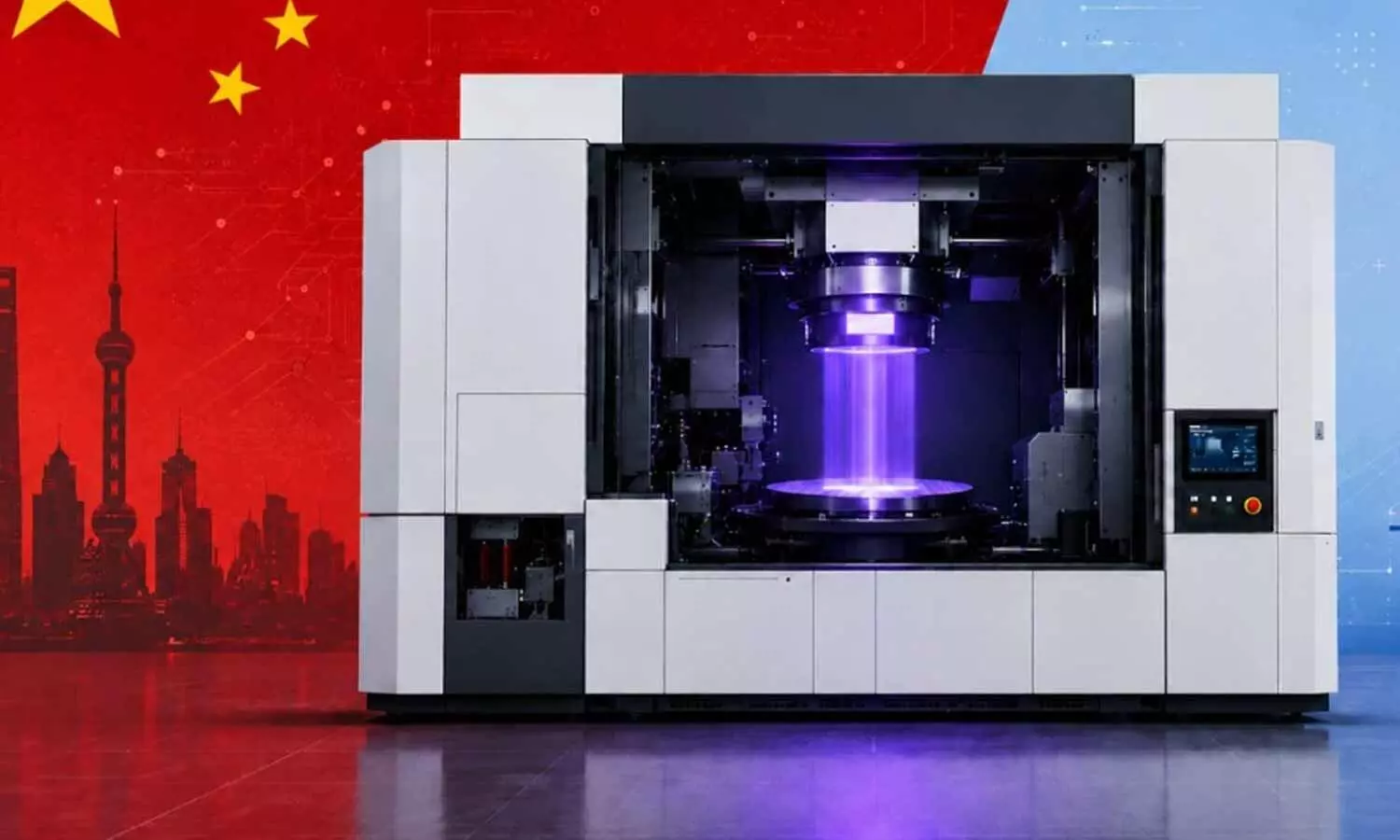
According to a report by a famous publication, this Shanghai-based company has initiated production of DUV lithography machines, which are used to manufacture processors. The company reportedly plans to build five domestic DUV systems this year and increase that figure to twenty next year.
The report notes that these machines are expected to be delivered this year to major Chinese chipmakers, such as Semiconductor Manufacturing International Corp (SMIC), Hua Hong Semiconductor, and ChangXin Memory Technologies.
Why China Needs Domestically Produced DUV Machines
Chips and processors are manufactured using a process called lithography, in which ultraviolet (UV) light is projected onto silicon wafers through photomasks (templates containing the chip’s design). This process requires advanced machinery utilizing DUV (Deep Ultraviolet) and EUV (Extreme Ultraviolet) technology.
Whether it is TSMC, Samsung, or Intel, all chip manufacturers rely on purchasing machinery from ASML. Because these machines incorporated US-made components, the White House was able to impose export controls on shipments to China. However, domestic production allows China to reduce its dependence on this Western-sourced equipment.
There is, however, an important caveat: China has begun producing DUV machines, not the more advanced EUV ones. Generally, DUV machines only allow for the manufacture of chips down to the 7-nanometer (nm) node, a process that requires a complex technique known as “multi-patterning.” To put this in perspective, the chip in the latest iPhone is manufactured using 3nm technology. Previous reports indicate that China’s most advanced domestically produced DUV lithography system—developed by Yuliangsheng—is technically comparable to ASML’s Twinscan NXT:1950i, a machine originally designed by the latter in 2008 for 32-nanometer class processes.
This implies that, while domestic DUV machines enable processor manufacturing, they will not yet allow China to produce cutting-edge chips. The report adds that China is also developing its own EUV machine, although that project remains in the prototype phase.
This situation could also hurt ASML’s business in China. According to available data, 30% of ASML’s revenue last year came from Chinese customers. Following the news, ASML shares fell sharply, dropping more than 7% at one point.
It is worth noting that China also faces restrictions on importing advanced GPUs from companies like Nvidia. These chips are essential for training and running advanced artificial intelligence models, although Chinese AI labs—such as DeepSeek—have been collaborating with domestic companies like Huawei to improve locally manufactured chips.