
BJP Seeks Apology from Sanjay Raut over His Albania Remarks
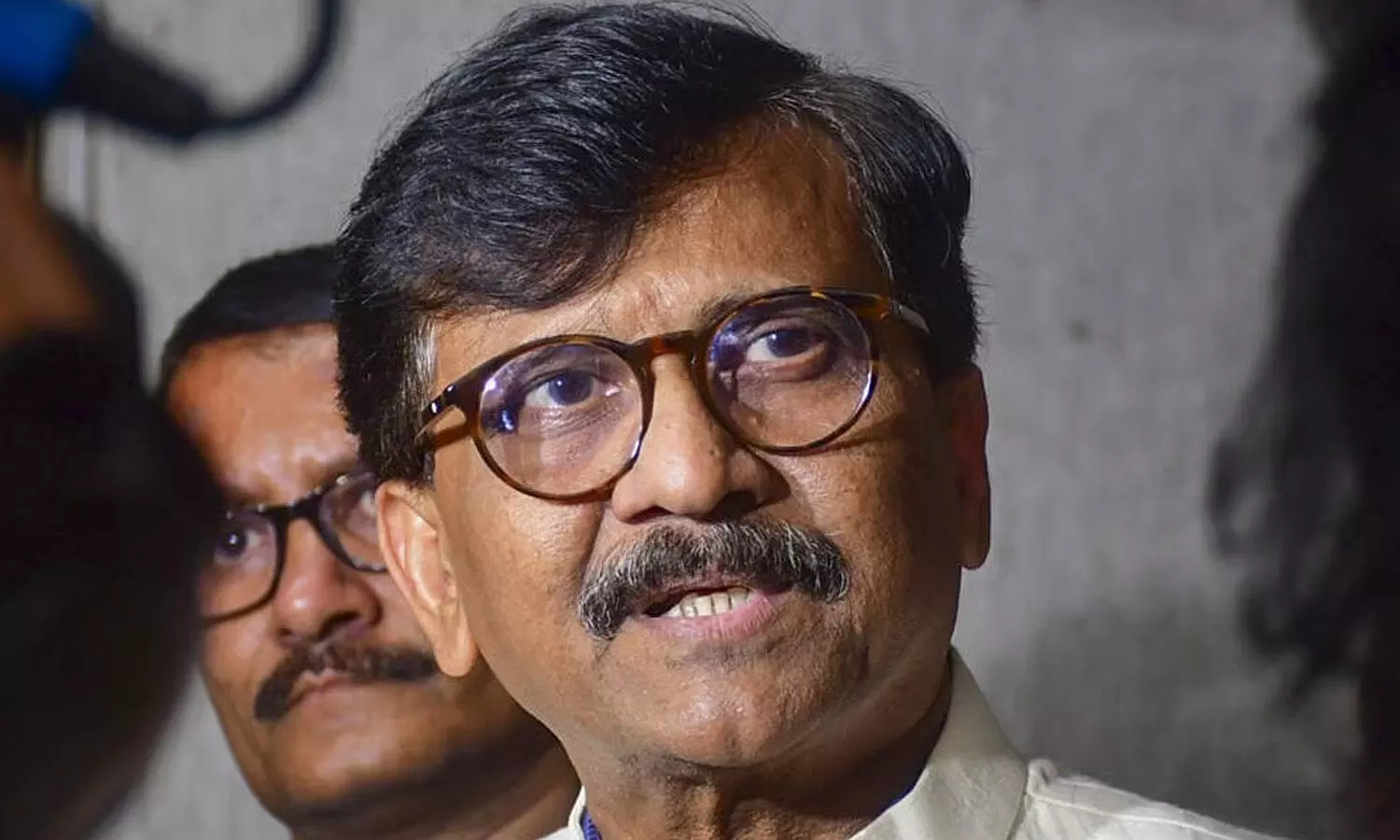
The Shiv Sena UBT leader Sanjay Raut, on his social media handle X made a sensational comment saying that all countries should learn a lesson from the events that are taking place in Albania, especially India. He wrote, “The people of Albania have burned down the Supreme Court. The people were enraged because the Supreme Court was helping corrupt prime ministers. The protesting public has also attacked the parliament and government offices, as well as the ministers’ homes.”
Congress leader Udit Raj expressed support for Raut’s remarks, linking the controversy to questions surrounding bail decisions.
“When bail is granted, no reasons are given, and Umar Khalid is denied bail. Bail is the rule, so why is it being denied? Why was it granted to others? There should be a speaking order,” he said.
In sharp reaction to this, the BJP on Tuesday said, “They want anarchy. First, they insulted and abused the President, then the Election Commission, and then the Chief Justice of the Supreme Court. Now, they want the Supreme Court to be burned. The people of India will not tolerate anarchy. A contempt petition against Sanjay Raut is currently underway in the Supreme Court, and he will get his answer there,” the BJP leaders said. They also demanded an unconditional apology from the MP.
BJP leader Syed Shahnawaz Hussain accused Raut of threatening the government and the Supreme Court. “He is saying that lessons should be learned from how the Supreme Court in Albania was set on fire. What message is he trying to convey? Is he trying to threaten the Supreme Court? Uddhav Thackeray should apologise to the Supreme Court for the kind of statement Sanjay Raut has made,” he said.
Another leader, Guru Prakash Paswan, said Raut should explain if he wants the Albania situation to be an example for India. “The Congress in Kerala also tweeted, ‘Remove the CJI’, and we will bring in a new CJI. The country runs according to the Constitution. …There are constitutional procedures. They are trying to create an atmosphere of anarchy,” he said.
Another leader, Kirit Somaiya, alleged that Raut was supporting the burning of Albania’s Supreme Court and accused him of repeatedly targeting constitutional institutions.
Shiv Sena leader Anand Dubey, responding to the controversy, invoked the occasion of Vijayadashami and said any wish to see India descend into violence and arson was unacceptable.
He said, “To those who pray or wish for India to burn, for chaos, violence, and arson to spread, or for our nation to descend into conditions like those seen in Albania, France, Pakistan, Sri Lanka, Bangladesh, or Nepal, should know that this cannot happen here; this is India,” he added.
On the other hand, addressing the RSS annual Vijayadashami Utsav in Nagpur, chief Mohan Bhagwat on Tuesday cautioned that regime-change agitations do not resolve fundamental problems, warning that protests could become instruments of political interests and fuel divisions in society rather than delivering solutions.
Bhagwat urged political leaders, protesters and the administration to ensure that their actions did not create bitterness or divisions in society.
“However intense our emotions may be, we must respect the limits set by our Constitution, the norms of civilised public discourse and standards of decent conduct,” He said the need for greater discernment among the younger generation in consuming information was necessary.
Citing recent incidents in Bangladesh, Nepal, France and Albania, Bhagwat said that subverting forces pursuing their own interests use regime change as a means to alter political circumstances, rarely achieving intended results. “They claim that changing a regime will change the situation, but that has never really happened,” he said.
Bhagwat said that while some global powers want India to develop, they do not want it to become too powerful, as it could challenge their dominance, he added.
On protests in a democracy, the RSS chief said they should aim to resolve problems rather than deepen social divisions.
“Problems will remain, and protests are inevitable in a democracy. But what should protests aim to do? They should be aimed at finding solutions,” he said.
He cautioned that protests could become political instruments when driven by objectives other than public welfare, fuelling hostility towards individuals, groups or ideologies