
Balance Needed Between Development and Environment for Western Ghats Conservation: Vivek Alva
Bengaluru: Western Ghats, one of the world’s most sensitive ecosystems, require careful protection of natural resources even as development proceeds. Achieving a balance between environmental conservation, people’s livelihoods and development is the need of the hour, said Vivek Alva, Trustee of Alva’s Education Foundation.
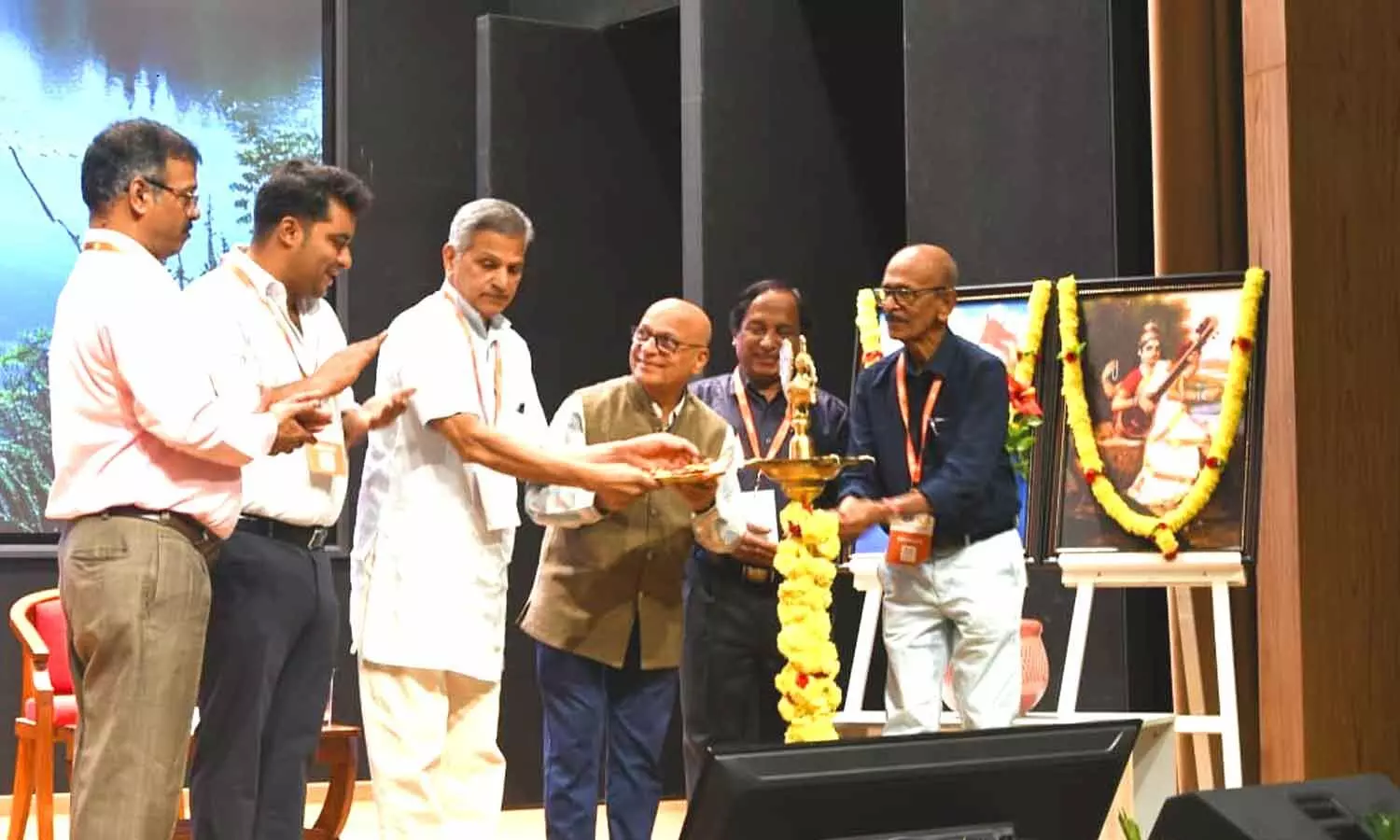
Speaking as the chief guest at the ‘Lake Conference–2026’ organised by the School of Engineering of Chanakya University in Bengaluru, Alva highlighted the rich biodiversity of the Western Ghats, the need to protect water sources and the importance of environment-friendly development.
He noted that while many regions in other countries support only 30 to 40 plant and animal species, the Western Ghats are home to around 6,800 species, of which nearly 3,500 are found in the section falling in this region. “People of Dakshina Kannada, with the Western Ghats on one side and the Arabian Sea on the other, are truly fortunate. Living amid such a delicate ecosystem, we must also recognise our responsibility to protect it,” he said.
Alva said Alva’s Education Foundation regularly conducts cleanliness drives and works to change people’s attitudes towards the environment and sanitation. “It is not enough to merely organise cleanliness campaigns; it is essential to cultivate concern for the environment and a sense of responsibility for cleanliness among every individual. Priority is being given to cleaning people’s minds as well,” he added.
In collaboration with an environmental protection team, the foundation is promoting an eco-friendly lifestyle through the ‘Hasiru Samvada’ (Green Dialogue) campaign across 56 villages. The initiative includes environmental awareness programmes, Green Diwali, Nagara Panchami and Green Ganesha celebrations. A two-day conference under the Hasiru Samvada banner will be held at Alva’s on January 6 and 7.
Calling for serious reflection on the environmental impact of projects such as the Yettinahole scheme, Alva said development plans must be based on scientific assessment of their ecological consequences. He pointed out that Nilgiri martens, once seen in the Yettinahole and Bisle Ghat areas, have not been sighted for about 15 years—a clear warning of changes affecting biodiversity. He also recalled that the Union Ministry of Environment, Forest and Climate Change had raised objections to the project.
Alva expressed concern over the proposed 2,000 MW Sharavathi Pumped Storage Hydroelectric Project in the Sharavathi valley. Large-scale projects in the fragile Western Ghats ecosystem could endanger biodiversity, particularly rare species such as the lion-tailed macaque. Long-term environmental impacts must be carefully considered before implementing such schemes, he stressed.
On the water scarcity in Kolar and other drought-prone areas, Alva acknowledged the genuine need of people and farmers who contribute to the country’s food security. Providing them adequate water is the responsibility of the government and elected representatives. However, solutions must not come at the cost of damaging the sensitive ecosystem of another region. Alternative water sources and sustainable measures should be identified so that the interests of people in water-stressed areas and the conservation of the Western Ghats are both protected.
Referring to changes in coastal districts, he said that about 150 years ago, paddy was cultivated on 4.73 lakh acres in Dakshina Kannada and Udupi districts. Today, paddy cultivation has declined sharply, largely due to reduced water availability. He also cited the example of the Vrishabhavathi in Bengaluru, which was once a flowing river but has now been reduced to a polluted drain. Losing natural water sources in the name of development will force future generations to face the consequences. A balance between development and the environment is therefore essential, he said.
Alva urged that projects undertaken by students and young researchers should not remain mere academic exercises. They must offer solutions to real societal problems, inspire community participation and evolve into community movements that support local development.
The 15th biennial Lake Symposium is being held from November 18 to 20 on the theme “Wetland Conservation for Developed India, Traditional Knowledge and Innovative Nature-based Technologies.” It is jointly organised by the School of Engineering of Chanakya University and the Energy and Wetlands Research Group of the Centre for Ecological Sciences at the Indian Institute of Science.
Those present included former Chairman of the Western Ghats Task Force and environmental activist Ananth Hegde Ashisar, Chanakya University Vice-Chancellor Prof. Yashwant Dongre, Dr. T.V. Ramachandra of the Indian Institute of Science, Dr. Shreesha Chokkadi, Professor at the School of Engineering, Chanakya University, and Dr. M.D. Subhash Chandran, Advisor at the Centre for Ecological Sciences, IISc.