
AGI at all costs; Nvidia digs its own grave: DeepSeek’s CEO has just declared war on Silicon Valley
It is unusual to see Chinese tech pioneers publicly express their opinions. Yet, that is exactly what Liang Wenfeng, CEO of DeepSeek, has done, offering a glimpse into the person behind one of China’s most important AI labs. Unlike Sam Altman (CEO of OpenAI) or Dario Amodei (of Anthropic), Liang Wenfeng is not interested in revenue or profits. DeepSeek’s top executive claims to have only one objective: artificial general intelligence (AGI)—a state in which AI can begin to think like humans.
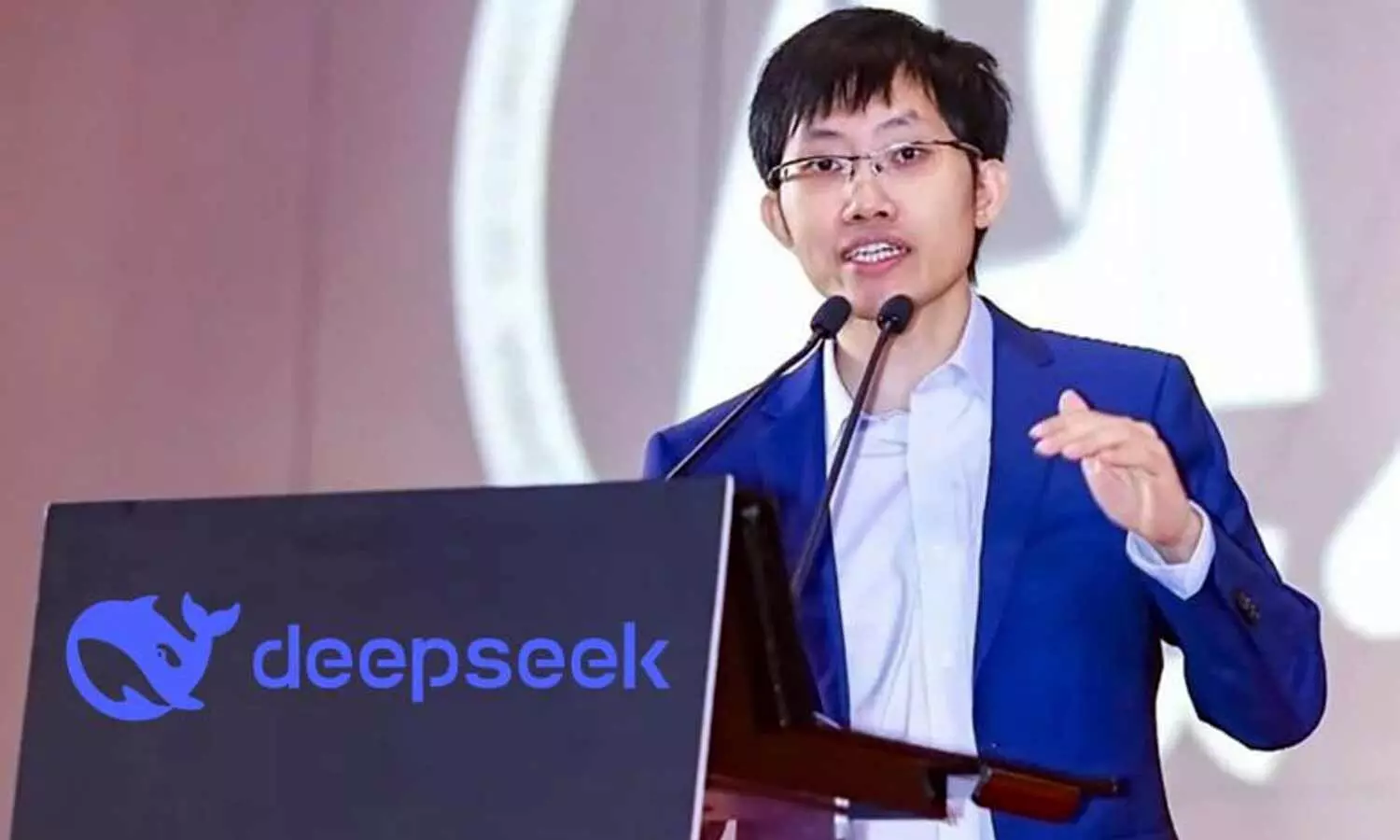
A recording of a nearly four-hour conversation between Liang Wenfeng and DeepSeek investors recently came to light. In it, Liang outlined his vision for the company’s purpose and effectively declared war on Silicon Valley—not only in the race to develop powerful AI models but also in the realm of advanced AI chips.
No IPO: DeepSeek acts for the common good
At a time when OpenAI and Anthropic are planning IPOs with valuations reaching the trillion-dollar mark, Liang Wenfeng ruled out the idea of an IPO for DeepSeek. He asserts that making money was never his priority. “Our original intention was not to earn a specific amount of money, nor to tap into capital markets, nor to go public, or anything of the sort. We didn’t have that initial intention,” stated the DeepSeek CEO.
He feels so strongly about this that the DeepSeek leader described revenue as “sesame seeds”—something he is not particularly concerned with gathering. He remarked: “We will pick up some of the sesame seeds we find along the way, but we won’t make a big deal out of it; we won’t stop or treat it as a priority.” Liang Wenfeng, on the other hand, has his sights set on the “watermelons” that might appear in the future. Beyond money, Liang believes DeepSeek exists to serve humanity—something he considers far more important than financial gain. He explained: “In short, we do this with a strong desire to contribute to the world, and we feel it is beneficial to humanity; it is something that transcends money.”
It is worth noting that OpenAI, which began as a non-profit organization, transformed into a for-profit entity last year, although its non-profit arm retains a 26 percent stake.
Liang Wenfeng emphasized that every great company needs a vision to remain true to, but that vision does not simply emerge from the words of its leaders. Instead, the vision is realized solely through the way the company operates. “What is vision? Vision isn’t a slogan hanging on the wall; vision is how things are done, not how they are talked about—in other words, how the company actually operates,” he added.
AGI is the goal
While AI labs in the U.S. seek to attract enterprise clients in hopes of monetizing their investments, Liang Wenfeng states that DeepSeek has a single goal: AGI (Artificial General Intelligence).
He explained: “Next is the company’s long-term vision: I believe our objective must be AGI.” He acknowledged that the definition of AGI varies depending on whom you ask. “Not everyone defines AI the same way, but that doesn’t stop us from considering AGI our goal,” declared the DeepSeek CEO.
According to Liang, AI development is like a “ladder” that advances gradually; that is, one breakthrough helps reach the next rung. He explained: “Why a ladder? Because each subsequent step builds on the foundation of the previous one. Agents use CoT (Chain of Thought), and CoT, in turn, relies on the prior step—the language model—so no step is wasted.”
Thus, over time—Liang Wenfeng notes—AI agents will continue to evolve; we will reach the next level and, eventually, advance toward AGI. Once an AI system became capable of continuous learning, it would reach the singularity. “It could develop its own version, conduct its own research, and create its next iteration, generating more advanced AI models. That is how it would reach a singularity, capable of achieving its own evolution,” he explained.
Liang remarked that this is also why DeepSeek wanted its models to be useful, first and foremost, to the company itself. If a model could help the company build the next one, the path to AGI would accelerate. He stated that AI does not fundamentally lack “judgment and intuition,” but rather the capacity for continuous learning. That—more than style or imagination—was, in his view, the primary technical barrier.
Nvidia is digging its own grave; Huawei aims to catch up
However, training an AI model requires the most advanced GPUs on the market. Due to trade restrictions imposed by the U.S., DeepSeek also faces limitations regarding the type and quantity of chips it can purchase from Nvidia, the dominant player in this sector. According to Liang, this will likely drive China to create a robust AI chip ecosystem. DeepSeek’s CEO stated: “If we were in a normal business environment where I could buy Nvidia cards, replacing them with domestic products would be relatively difficult; but when you can’t buy Nvidia cards, everyone is forced to do so—everyone has to turn to domestic chips.”
Liang Wenfeng asserts that, due to the restrictions, Nvidia was digging its own grave while Chinese companies worked on developing more advanced chips. “I am relatively optimistic about domestic computing power. I believe that, in this regard, Nvidia is digging its own grave. Huawei’s supernode—the Huawei Supernode 950—can completely replace Nvidia’s GB200 and GB300 models in terms of both performance and price,” he explained.
In other words, rather than restrictions on Nvidia chips stalling AI development in China, Chinese companies began manufacturing their own chips to meet their needs. DeepSeek is already collaborating with Huawei on the design of advanced chips capable of training AI models. Liang Wenfeng explained: “We currently collaborate primarily with Huawei. Huawei makes its own adaptations, but we will participate in this ecosystem and work closely with Huawei.”
Another factor contributing to reduced reliance on Nvidia was that DeepSeek no longer required the Nvidia ecosystem, as it was capable of writing its own code. Liang noted: “Nvidia cards were used to train DeepSeek V3, but the Nvidia ecosystem itself was not employed. We first developed a high-level compiler called TileLang and built the rest based on the TileLang ecosystem.”
However, there is still a long way to go before Huawei or any other Chinese player can offer substitutes equivalent to Nvidia chips. Denfeng commented: “The only drawback is that it takes four Huawei cards to match the performance of a single Nvidia card, in addition to a two-year technological lag.”
Just as Huawei succeeded in creating advanced AI chips, DeepSeek’s CEO believes that Chinese AI labs will also create models that are not only powerful but also far more cost-effective. He stated: “Chinese players will make this the cheapest product, and in terms of results. Ultimately, there isn’t much difference today between Chinese and US versions of many products.”
“AI could follow the same trend in the future, but Chinese-made AI might come at a lower price point. This low cost could be systemic, mirroring other sectors where China offers more affordable services,” Liang Wenfeng declared.
While companies like OpenAI and Anthropic rely on closed-source models—which are often more expensive to run due to token-based fees—DeepSeek offers open-weight models that are far cheaper to use. Like DeepSeek’s models, other Chinese AI models—such as Moonshot AI’s Kimi K3 and Zai’s GLM 5.2—are also open-weight models.