
Much Drama, Little Legal Preparation:10 Defects in Rahul’s SIR Plea
The Supreme Court did not take up the plea filed by Leader of the Opposition Rahul Gandhi and 10 others on Tuesday after the Registry flagged 10 defects in the petition. It is time the Congress party stopped using terms such as “Andh Bhakts” against its political opponents when its own legal team appears to have failed to ensure that the petition was in order. This raises a larger question about the high drama witnessed on the streets of Delhi on Monday.
Was it more about optics than a serious attempt to protect democracy?
Rahul Gandhi held a press conference on Monday morning and claimed that everything was over. He asserted that there was evidence to prove that the Special Intensive Revision (SIR) of electoral rolls was a fraud and warned that the Chief Election Commissioner (CEC), the Prime Minister and the Union Home Minister would have to face the consequences. He also said that the Congress leaders wanted to meet the Chief Justice of India (CJI) and explain their concerns to him.
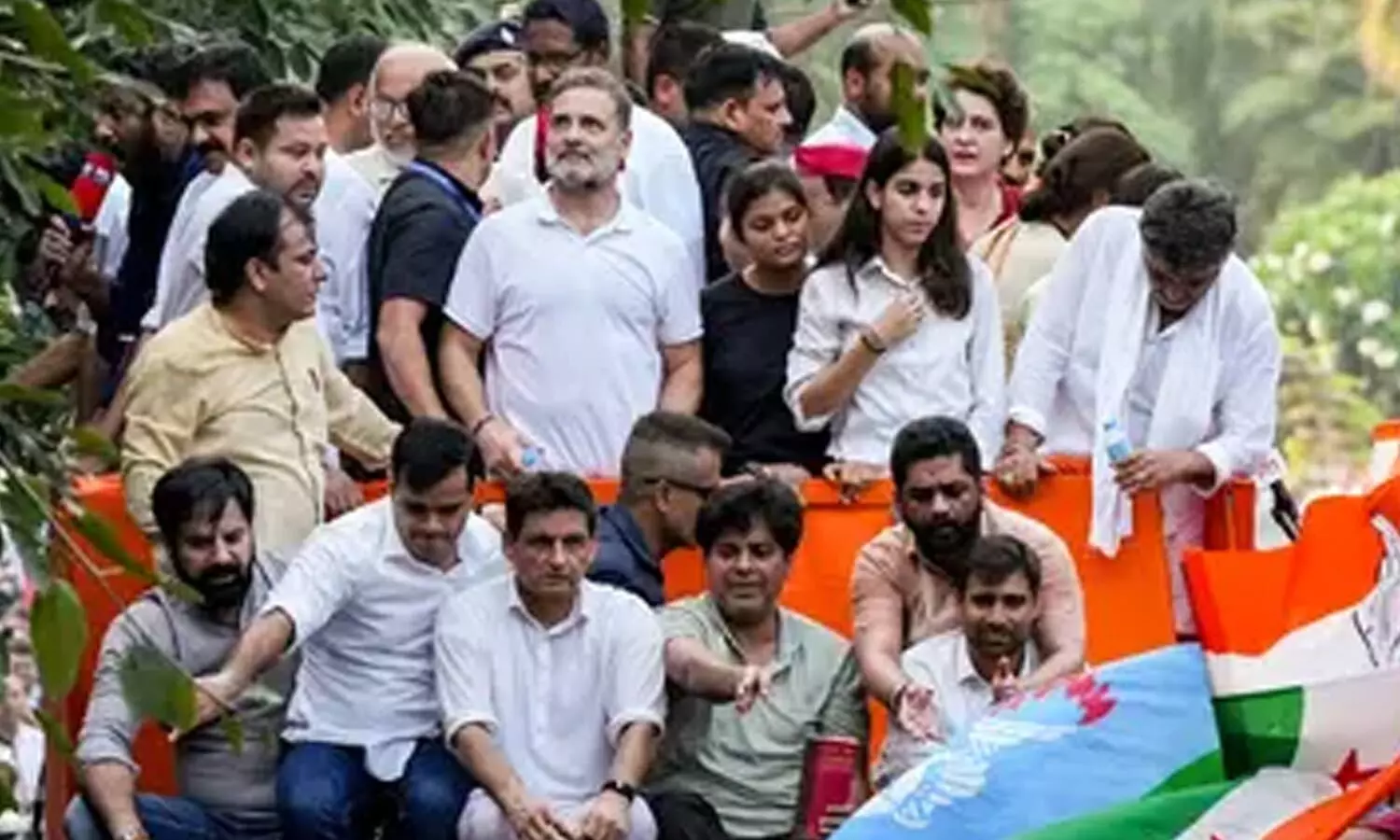
The Congress leader subsequently led a large rally involving party activists from the Congress, Samajwadi Party, Rashtriya Janata Dal and Left parties. Meanwhile, a three-month pregnant woman journalist, Richa Parashar, on Tuesday told the media from the hospital that she was held by her shoulder and pushed by Rahul Gandhi while attempting to get a sound bite from him. She claimed that she fell on the road, sustained injuries and received no assistance from the activists present. Her mic and her iPhone fell down and got damaged, and even though she kept shouting for help, no one came to her rescue.
She said she represents oneindia. Com, a news website which is not affiliated to any political party. The Congress, meanwhile, reportedly dismissed the controversy as a publicity stunt by the BJP.
The irony, however, is that after all the high drama, the petition filed by the opposition leaders was itself found to contain multiple defects by the Supreme Court Registry.
According to media reports, the Registry asked the lawyer handling the filing to submit a clear copy of the identity card of Congress president Mallikarjun Kharge, the Leader of the Opposition in the Rajya Sabha and one of the co-petitioners. It also reportedly pointed out illegible material and missing pages in the petition. More strikingly, there was a reported shortfall of over ₹200 in the court fee. One would expect an experienced legal team to be familiar with the filing requirements and applicable court fees. Yet, these reported deficiencies were apparently not addressed before the petition was submitted.
It may be recalled that Rahul Gandhi, who was supposed to file the petition before 4.30 pm in the Supreme Court, reached the court premises after 6 pm. The petition was filed by his legal team before the deadline. The BJP slammed the LoP as what the need was to go to the Supreme Court almost two hours after the counter to file the petition was over. If he was serious, he could have gone to the court in his own vehicle and filed it instead of resorting to the “theatrics” on the road. After all that, the plea is full of legal shortcomings. This, the BJP says, shows how non-serious the LoP is regarding the SIR.
The BJP has questioned the Congress’s approach, arguing that its actions were inconsistent with its stated commitment to constitutional propriety. Reacting to the Congress leader’s statement that he wanted to meet the CJI and explain the case to him, they said that as LoP, he should have known that there is something called “Separation of Powers.” The legislature, executive and judiciary have distinct functions and should not improperly encroach upon one another’s domains.BJP spokespersons reportedly argued that the Chief Justice could not be expected to respond to political demands while a related matter was pending before the court.
The BJP also questioned the propriety of seeking a meeting with the CJI, who heads the Bench hearing the SIR case. Any such request must be assessed in the light of established judicial practice and the rules governing interactions with judges, particularly when a related matter is pending before the court.
The questions that arise are straightforward. Did the Congress leadership receive adequate legal advice before announcing its plans? Were the prescribed procedures followed? And why was the petition not checked thoroughly before filing, if the issue was considered so urgent and consequential?
The Leader of the Opposition is entitled to question the Election Commission and challenge its decisions through lawful means. But constitutional accountability applies to political parties as well. If the Congress wants to convince the public that it is fighting to protect democracy, it must ensure that its own actions demonstrate procedural diligence, legal preparedness and respect for constitutional institutions. Political rhetoric and competitive street demonstrations may attract public attention, but they cannot substitute for a properly prepared legal action.