
CJP Turns Up Heat on Centre Over Election Row, Alleges Crackdown on Protesters in Delhi
New Delhi: The Cockroach Janata Party (CJP) has intensified its attack on the Central government, Delhi Police and Chief Election Commissioner Gyanesh Kumar, alleging that an extensive security deployment in the national capital was aimed at preventing citizens from protesting against alleged electoral irregularities. Addressing a press conference on Sunday, CJP national spokesperson Ashutosh Ranka, co-convenor Saurav Das and legal head Ratna accused the authorities of suppressing dissent instead of answering questions about the electoral process. The party alleged that students, young people, activists and members of several organisations were stopped or detained despite their intention to stage peaceful demonstrations. It asserted that neither police action nor detention would force it to abandon its campaign for electoral accountability.
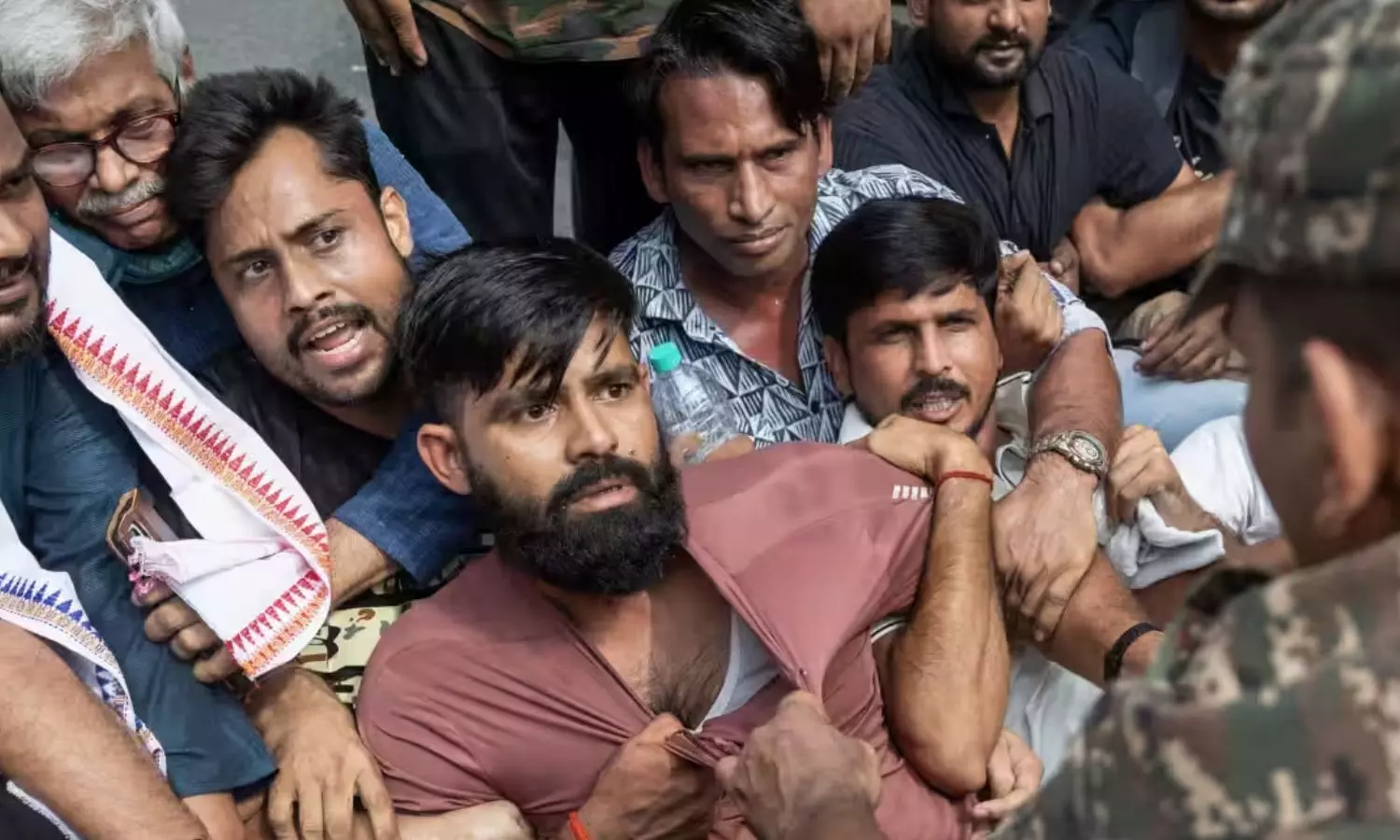
Das launched a direct attack on the Centre, alleging that the government had created an atmosphere in which citizens seeking answers were being treated as adversaries. He said people had travelled to Delhi to raise their grievances and peacefully demonstrate at the designated venue, not to engage in violence. Instead of speaking to them, he alleged, the authorities deployed large numbers of police personnel and attempted to prevent them from assembling. Das claimed the operation was intended to protect Kumar from scrutiny and challenged Prime Minister Narendra Modi and Union Home Minister Amit Shah to explain why the government was responding so forcefully to the protesters. He questioned what was at stake in the matter involving the Chief Election Commissioner that warranted such an extensive security response.
Comparing the situation with the Emergency, Das alleged that the government was attempting to silence opposing voices and create an environment hostile to public protest. He claimed that security personnel had been brought to Delhi from several states over the preceding days and that barricades had been erected across multiple parts of the capital. He also raised concerns about metro station closures, disruptions to railway services and shops remaining shut, arguing that the arrangements had inconvenienced ordinary residents alongside protesters.
Das questioned why the authorities were relying on restrictions rather than dialogue if they believed the demonstration could create problems. He alleged that the government was trying to build an atmosphere against protests instead of addressing the issues behind them. According to him, the situation raised serious concerns about the space available for peaceful dissent in a democracy.
The CJP co-convenor also levelled allegations against the police over the treatment of him and his associates. Das claimed that they were forcibly removed from an aircraft and detained without the prescribed legal safeguards being followed. He alleged that the authorities did not clearly communicate the grounds for their detention or show them the relevant documents.
Das further claimed that their mobile phones were taken away and that they encountered difficulties while attempting to contact their lawyers. He also expressed apprehension that his phone might have been tampered with. Calling for intervention by the Human Rights Commission and the judiciary, he demanded an impartial investigation into allegations of physical assault and mistreatment in custody. He stressed that detention must follow due process and that authorities should be held accountable for any violation of legal rights.
Ranka raised questions about the police response to Abhijit Dipke following the death of his grandmother. He alleged that Dipke wanted to contact his family while in detention to learn what had happened at home but was not given the necessary consideration. According to Ranka, Dipke sought permission to speak to his relatives, but the police failed to respond sensitively to his situation and handled the matter in a way that risked turning a personal tragedy into a public spectacle.
Ranka expressed condolences to Dipke’s family and said that, after his release, Dipke left for his ancestral village to attend his grandmother’s last rites. He noted that Dipke had decided to remain committed to the movement despite his personal loss. Ranka said the party respected the family’s grief but maintained that the demand for accountability in the electoral process would not be set aside.
The alleged removal of names from voter lists emerged as another central issue at the press conference. Ranka questioned Kumar’s role in addressing concerns about electoral irregularities and claimed that serious questions remained unanswered over the deletion of large numbers of voters. He accused the government of avoiding a meaningful response to these concerns and demanded transparency in the electoral process.
CJP called for a clear account of the alleged irregularities and demanded that responsibility be fixed wherever wrongdoing was established. Ranka again questioned why Modi and Amit Shah were defending Kumar instead of addressing the allegations. He argued that the Election Commission’s impartiality must be open to scrutiny and that questions about the functioning of democratic institutions cannot be dismissed without a response.
The party maintained that its campaign was centred on electoral accountability and transparency, rather than being limited to a confrontation with individual officials. It called for the concerns surrounding voter lists and the electoral process to be examined and addressed.
Independent Journalists, Gurudwara Incident Add to Police Action Allegations
CJP also accused the police of interfering with the work of independent journalists covering the protest. Das alleged that reporters documenting the developments faced police action and were prevented from carrying out their work freely. He said restrictions on journalists covering a public demonstration raised concerns about press freedom and the right to report on matters of public interest.
Das also alleged that some people participating in the protest sought shelter inside a gurudwara, but police personnel entered the premises and attempted to bring them out. He described the incident as a serious concern involving the sanctity of a religious institution and the rights of people who had sought refuge there. Appealing to the Sikh community, he urged its members to stand with students and young people participating in peaceful demonstrations.
‘Acting on Orders From Above’: Ratna Seeks Clarity on Detentions
Ratna, the party’s legal head, alleged that police personnel were visiting the homes of people associated with the movement and pressuring their families to discourage participation in the protest. She claimed that she and her associates were tracked while travelling from Bengaluru to Delhi. After reaching the capital, police personnel allegedly visited their residence and detained them for several hours.
According to Ratna, when those detained asked the police to explain the reason for their detention, the response was that orders had come from higher authorities. She questioned the legal basis for such action and demanded to know who would be held responsible if the orders resulted in violations of citizens’ rights.
Ratna argued that peaceful assembly, public demonstrations and the ability to raise grievances were essential democratic rights. She alleged that the police action had undermined these freedoms and called for an investigation into claims of physical assault, the confiscation of mobile phones and obstacles to contacting lawyers. She said the authorities must provide clear reasons for detention and ensure accountability for any unlawful action.
Opposition Leaders, Student Groups Rally Around Accountability Campaign
CJP said its movement was not confined to a single political organisation and involved students, social activists and people associated with different political groups. The party thanked those who had expressed support and referred to opposition leaders, including Arvind Kejriwal, Mamata Banerjee, Manik Sarkar and Pinarayi Vijayan.
Its leaders argued that political parties, student organisations and civil society groups needed to work together to raise concerns about electoral transparency and democratic accountability. CJP also claimed that workers associated with several participating organisations had been detained and subjected to mistreatment. It demanded that the rights of those in custody be protected and that allegations against the police be investigated impartially.
Despite the alleged restrictions, detentions and other difficulties described at the press conference, CJP leaders made it clear that they would not withdraw from the movement. They called on students, young people and citizens across the country to continue raising questions about transparency, accountability and the electoral process.
Ranka said personal hardships and detention would not force the party to abandon its demands. Das urged the government to engage with the protesters rather than attempt to silence them. The party reiterated its commitment to peaceful protest and insisted that the allegations surrounding voter deletions, the functioning of electoral institutions and the treatment of demonstrators required answers.