
Cheque bounce cases: Rajpal Yadav offers Rs 2 crore payment; SC expresses displeasure over conduct
New Delhi: The Supreme Court on Wednesday directed actor and comedian Rajpal Yadav to deposit Rs 1.15 crore with the apex court registry after his counsel submitted that the amount was ready to be deposited immediately, while another Rs 85 lakh would be arranged through a prospective buyer of his ancestral property, as part of arrangements to pay Rs 2 crore in connection with multiple cheque dishonour cases.
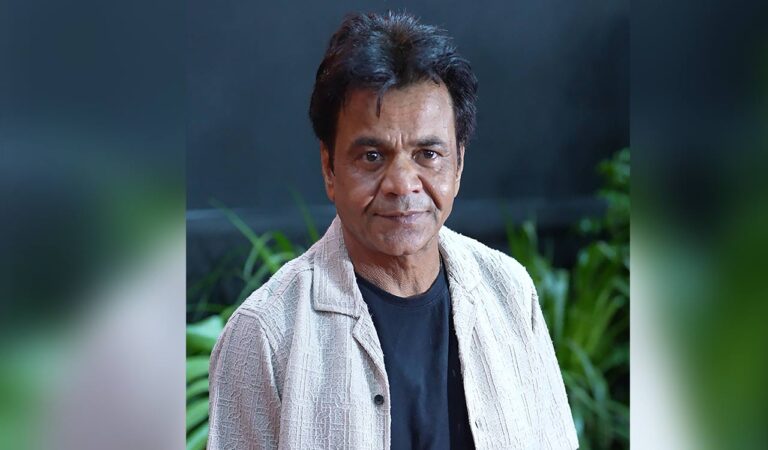
A Bench of Chief Justice of India (CJI) Surya Kant and Justices Joymalya Bagchi and V Mohana was hearing Yadav and his wife Radha Yadav’s pleas challenging the Delhi High Court judgment upholding their conviction in seven cheque dishonour cases under the Negotiable Instruments Act.
During the hearing, the CJI Kant-led Bench was informed that Yadav had arranged Rs 1.15 crore through demand drafts, while a prospective buyer of his ancestral property, who was present in court, was willing to pay another Rs 85 lakh as an advance.
Yadav’s counsel told the top court that the buyer was not presently willing to register the sale documents due to Pitru Paksha and wanted to proceed with the registration after the commencement of Navratri.
The counsel further submitted that the buyer was willing to deposit the Rs 85 lakh by way of a demand draft on Monday. However, the Supreme Court questioned the overall value of the transaction, remarking that the liability was substantially higher than Rs 2 crore.
“What will be the total sale consideration? Because the liability is much more than Rs 2 crore,” the CJI Kant-led Bench asked. The counsel said the property was valued at more than Rs 30 crore and confirmed that the prospective buyer had the capacity to make the proposed payment.
The complainant’s counsel agreed to the proposal and submitted that if Rs 2 crore was paid immediately, Yadav could be granted additional time to pay the remaining amount.
The CJI Kant-led Bench suggested that Rs 1.15 crore be deposited immediately, with the remaining Rs 85 lakh to be transferred on Monday, after which the top court would lay down a schedule for payment of the balance amount.
During the hearing, the Supreme Court expressed displeasure over Yadav’s conduct in complying with its earlier directions and indicated that it was inclined to enhance his three-month imprisonment sentence to two years.
Justice Bagchi observed that the apex court was not satisfied with Yadav’s conduct and said the accommodation being extended to him was aimed at ensuring that the complainant recovered the money.
The top court’s latest order came after it had, on October 5, found that its September 15 direction had not been complied with.
On that occasion, the CJI Kant-led Bench had observed that a photocopy of a purported Rs 50 lakh demand draft was produced with a claim that the draft would reach Delhi the following day.
The Supreme Court had then granted a final opportunity to Yadav to pay a total of Rs 2 crore and posted the matter for October 7.
On September 15, the apex court had granted Yadav two weeks as a last opportunity to deposit at least Rs 2 crore, after recording that its earlier direction to deposit Rs 5 crore had not been complied with. The Supreme Court is hearing Yadav and his wife Radha Rajpal Yadav’s petitions challenging the Delhi High Court judgment upholding their conviction in seven cheque dishonour cases under the Negotiable Instruments Act.
The Delhi High Court had on July 10 upheld Yadav’s conviction while reducing his sentence from six months to three months’ simple imprisonment in each of the seven cases. It had also reduced the fine from Rs 1.60 crore to Rs 1.05 crore in each case, with the substantive sentences directed to run concurrently.
The High Court had taken into account payments already made by Yadav to the complainant, M/s Murli Projects Pvt Ltd., during the pendency of the proceedings. Yadav and his wife have challenged the judgment before the Supreme Court, contending that a subsequent consent agreement between the parties was not properly considered by the courts below.
The petitioners have relied on the Supreme Court’s judgment in M/s Gimpex Private Limited vs Manoj Goel, arguing that the subsequent agreement between the parties ought to have brought an end to the original complaint proceedings.