
Machchhar’s quick thinking helped avert bigger tragedy: Former colleague
Mumbai: Former colleague of Captain Smit Machchhar, Tina Goswami, said on Monday that the Indian pilot had shown presence of mind and quick thinking while fighting off his co-pilot during an alleged attempt to hijack a flydubai flight.
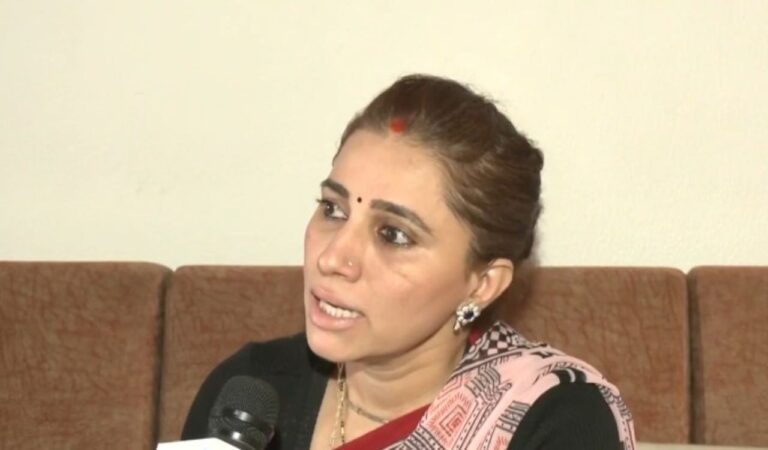
Goswami said pilots and crew members were generally trained to deal with external threats as a team through crew coordination, but the incident involved an internal threat that Machchhar had to confront alone.
In the aftermath of the alleged “attempted terror attack”, which was averted following Machchhar’s intervention despite him being attacked with an axe by the flight’s co-pilot, Goswami said saving even one life was a major achievement.
Speaking to IANS, Goswami said, “The first reaction was that we were all scared and wondering whether everyone was safe. This was not a normal incident. It was a very serious and unusual matter because, generally, as pilots, all the training we undergo and all the emergencies we prepare for depend on teamwork and coordination among the crew.”
She added that they were shocked when they first heard about the incident because it was not an external threat but an internal one.
“Once we realised that he (Capt Smit Machchhar) saved everyone and the flight landed safely, we were very proud,” she said.
Goswami explained that pilots undergo extensive training after joining an airline, followed by simulator training every six months and crew resource management (CRM) and crew coordination training every year.
“In CRM and crew coordination training, we are taught how to show respect. It is not that because you are the captain, you are above everyone else. We are also taught how to respect every individual. A co-pilot is entitled to speak if they feel that the captain is doing something wrong,” she said.
Goswami said experienced pilots could detect unusual changes in an aircraft’s behaviour through what she described as a “feeling of flight”.
“As he said, he has been flying for 17 years, so he can tell even with his eyes closed. We call this the ‘feeling of flight’. Just as I have also been flying for 25 years, we can tell,” she said.
“If the aircraft is descending, climbing, its speed is decreasing or increasing, whenever the aircraft behaves unusually, even if you are asleep, even if your eyes are closed, you can still tell how the aircraft is behaving,” she added.
“Ultimately, saving even one person’s life is a very big thing. Yesterday, we also saw an interview of his with Prime Minister Benjamin Netanyahu. In it, he explained how he used his last bit of strength to try to open the door,” Goswami said.
She said this demonstrated Machchhar’s presence of mind, as he realised that opening the door could help save everyone.
“He knew that, given the way he was injured and the way the aircraft was out of control, he would not be able to do anything,” she said.
“He realised very quickly that the only thing he could do was open the door, and only then could something happen,” she added.
Asked about Machchhar being called a hero, Goswami said the description was well deserved given the circumstances.
“It was a big thing to achieve. The only thing we could see was that he was able to save 170-180 passengers, but it could have turned into something bigger, something worse,” she said.
“He was able to avert plausible geopolitical tensions. Not only for the country, but he also brought laurels to the pilot community,” she added.