
Borrowed time: The hidden cracks in India’s state finances
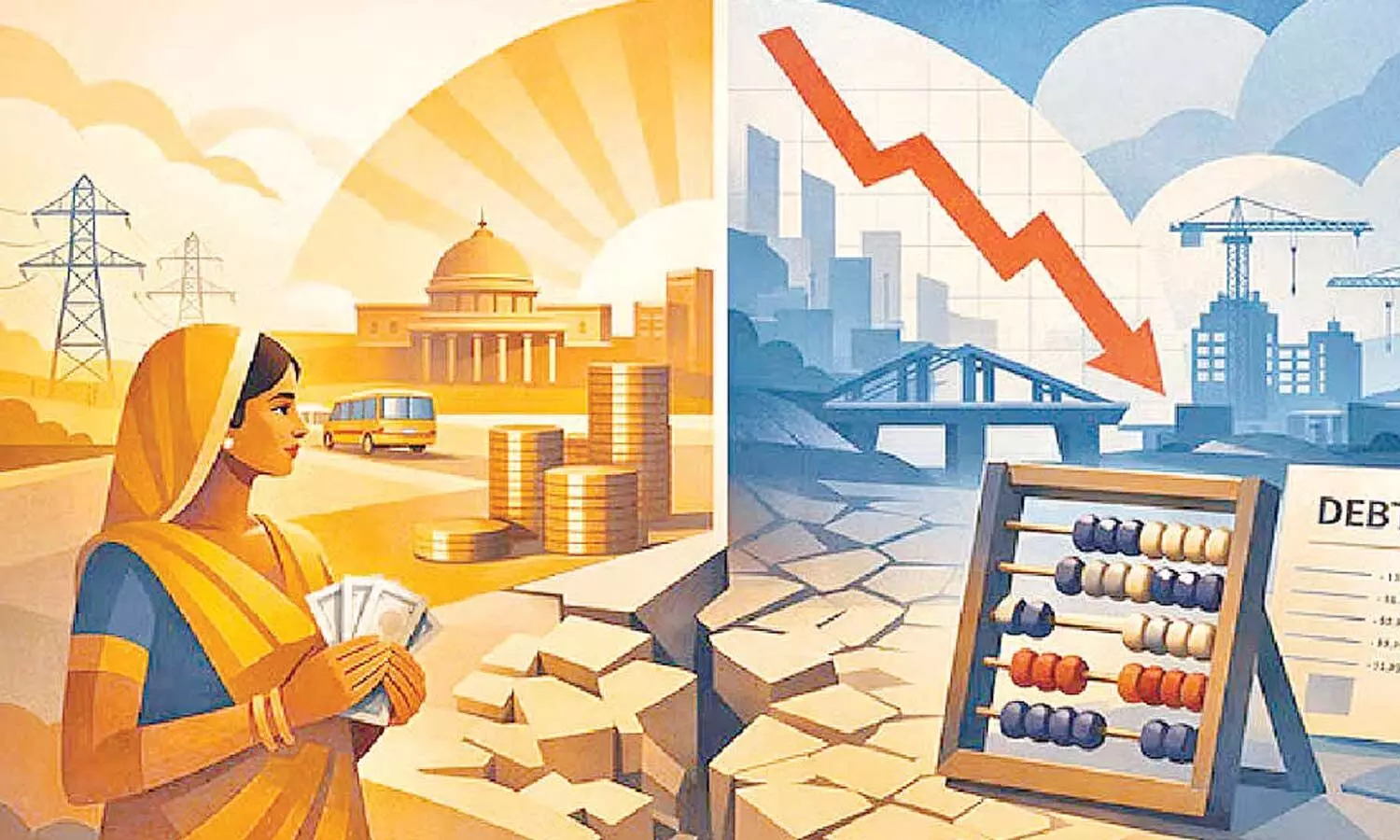
There is a particular kind of danger that looks like stability on the surface but is quietly hollowing out from within. That is the story of India’s state finances, as laid bare in the RBI Advisory Committee’s Report on Ways and Means Advances (WMA) to State Governments. The headline numbers look reassuring: deficits have narrowed since the pandemic, debt ratios have eased, and revenues have bounced back. But beneath that calm lies a troubling reality – rising committed obligations crowding out productive spending, opaque off-budget borrowings, and a widening gap between what states must do and what they can actually afford.
The post-pandemic sugar rush
The Covid-19 pandemic hit state finances hard. In 2020-21, India’s states ran a gross fiscal deficit of 4.1% of GDP, their worst in years, with outstanding liabilities peaking at 31% of GSDP by March 2021. The recovery that followed looked impressive: buoyant GST collections, higher central tax devolution, and expenditure rationalisation brought the deficit down to 2.7% of GDP by 2022-23. Revenue receipts rose from 13.1% of GSDP in 2019-20 to 13.9% in 2024-25 (RE), while liabilities eased to around 28% of GSDP. These gains were real – but the real question is whether they are sustainable.
Spending more, not necessarily better
Since 2024-25, pressure has crept back. Revenue expenditure is rising again – touching 14.4% of GSDP, budgeted for 14.6% in 2025-26 – and the gross fiscal deficit has climbed back to 3.5% of GDP, undoing earlier gains. The problem isn’t spending itself, but its composition. “Committed expenditure”- salaries, pensions, and interest payments – now consumes roughly 30.6% of total revenue expenditure (BE 2025-26). These are non-negotiable costs that can’t be switched off when revenues disappoint, steadily draining resources away from roads, schools, hospitals, and irrigation.
Compounding this, non-merit, populist spending – untargeted subsidies and unconditional cash transfers – keeps rising in several states. The Sixteenth Finance Commission has flagged that many such schemes have bloated, poorly targeted beneficiary rolls. Yet amid competitive electoral politics, announcing freebies remains far easier than investing in the unglamorous work of building productive assets.
The hidden debt problem
If committed expenditure is a slow leak, off-budget borrowing is a concealed crack below the waterline. Several states finance subsidies and other spending through loans taken by state-owned entities and special purpose vehicles – liabilities that are real but don’t show up in official deficit figures, making those numbers misleading. The Sixteenth Finance Commission insists such borrowings must be fully disclosed and formally counted as debt under State Fiscal Responsibility Legislation. The RBI’s committee echoes this. But the fact that successive panels keep repeating this warning shows how little has changed – the temptation to borrow “invisibly” remains too strong for many state treasuries. The clearest example is the DISCOM crisis: many power distribution companies are technically insolvent, carrying legacy debt that states have guaranteed. These guarantees don’t appear in deficit numbers but are real contingent liabilities – and if even a fraction are invoked, the fiscal shock could be severe.
A tale of two Indias
Fiscal performance across India’s 28 states and Union Territories (2019-20 to 2025-26) has been strikingly unequal. Some traditionally weaker North-Eastern and Eastern states have improved significantly. Odisha stands out, having built Consolidated Sinking Fund (CSF) balances worth nearly 47% of its marketable debt – a model of prudence.
At the other extreme, Madhya Pradesh had zero CSF balance as of July 2026. Punjab’s debt remains dangerously high, while Rajasthan and Haryana hold CSF balances of just 0.6% and 1% of marketable debt, respectively – leaving them exposed to rollover risk. These are large, populous states with pressing development needs but almost no fiscal cushion. This imbalance matters for the nation: India cannot sustain 7-8% growth if its most populous states are fiscally paralysed, their revenues consumed by debt servicing and populist transfers instead of investment.
The cash management puzzle
States also tend to bunch market borrowings into the fourth quarter (January–March)- citing expenditure backloading and a desire for healthy year-start cash balances. But this bunching floods the market with government securities, raising borrowing costs for all states, not just the ones responsible. The RBI’s new Benchmark Issuance Strategy, now adopted by most states and being extended from 2026-27, aims to fix this – though old habits persist. Ironically, the very states that rush to borrow late in the year often sit on idle cash simultaneously, running two costly, contradictory strategies at once.
WMA Revision: Useful, not a cure
The report’s immediate trigger was revising WMA limits – the RBI’s short-term liquidity support for states’ temporary cash mismatches. The Committee recommends raising the aggregate limit from Rs 61,008 crore to Rs 67,839 crore (an 11.2% increase), reflecting states’ growing revenue base. Sensible as this is, the Committee is firm: WMA is a cash-management tool, not a fix for structural deficits. States cannot keep borrowing overnight from the RBI to paper over a chronic mismatch between revenue and spending promises.
The path forward
India’s fiscal federalism stands at a crossroads. The Sixteenth Finance Commission has kept the 41% vertical devolution ratio intact – a floor, not a ceiling. The harder work lies within the states: rationalising subsidies, eliminating poorly targeted ones, ending off-budget borrowing disguises, strengthening their own tax revenues (currently just 6.5-7% of GSDP), and making capital expenditure – not committed spending – the centrepiece of budgets.
At its core, the RBI’s report is a quiet alarm bell from technocrats who understand that the gap between political incentives and fiscal sustainability, left unaddressed, eventually turns from a choice into a crisis. India’s states aren’t there yet – but the window to course-correct is narrowing. The time to act is not when the crisis arrives. It is now.
(The writer is with Cholleti BlackRobe Chambers, Hyderabad, and writes on the economy, politics and law)