
Will data centres drain Hyderabad dry?
Hyderabad is positioning itself as a major hub for artificial intelligence infrastructure. Data centres are expanding rapidly on the city’s periphery, with the Telangana government targeting 5 GW of capacity and investments of around $30 billion by 2029. Already, roughly 300 MW of capacity is operational and another 2 GW is in the pipeline. Applications for a further 12 GW remain under scrutiny. The economic opportunity is significant: high-value employment, global capability centres, and a stronger position in the digital economy. The resource question is equally pressing. Can a city already under water stress absorb this additional demand without tipping into a deeper crisis?
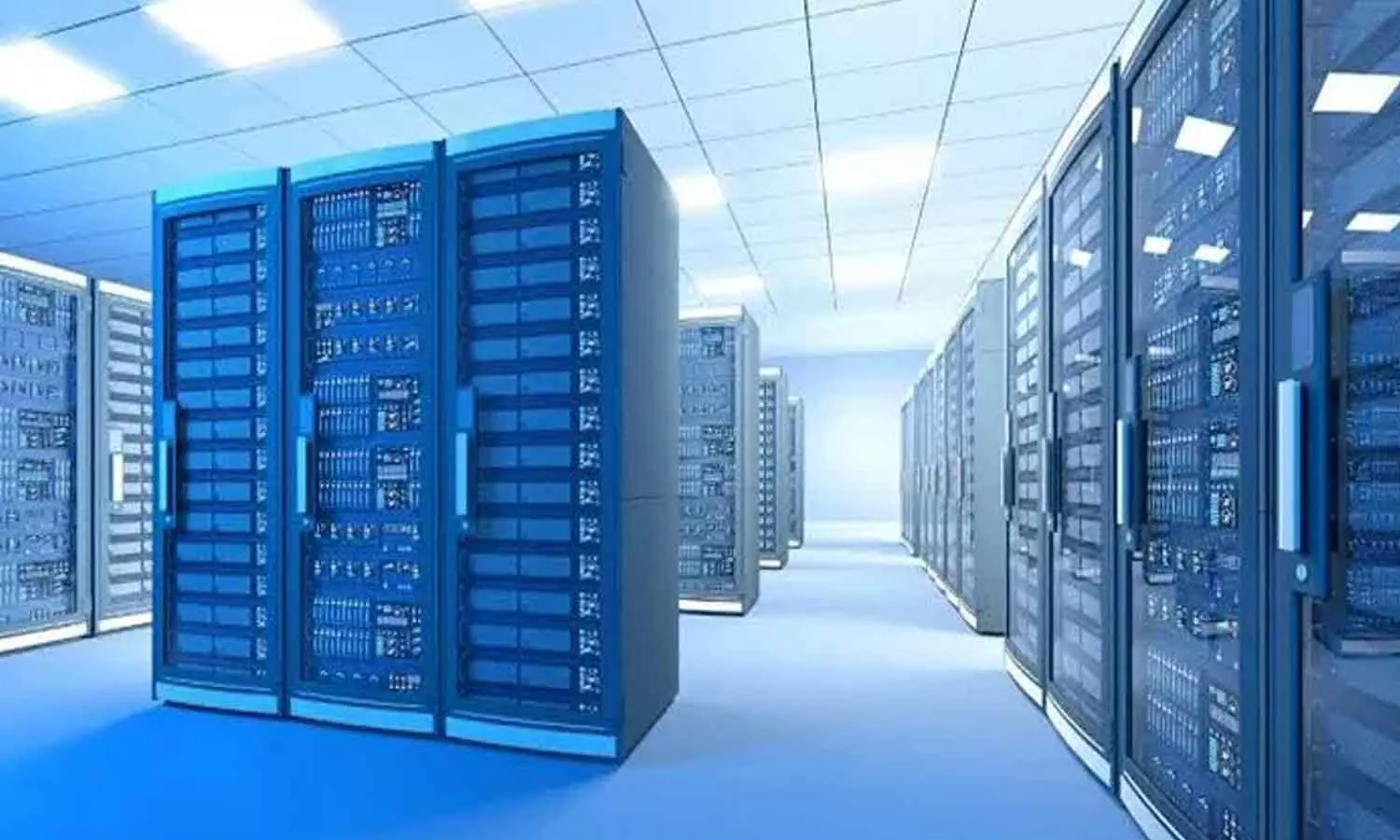
Conventional data centre cooling is water-intensive. Industry and research estimates indicate that a 100 MW facility can consume roughly two million litres of water a day under traditional evaporative systems. Scaled to a gigawatt, the annual requirement can run into several billion litres. At the national level, India’s data centres are estimated to have used about 150 billion litres of water in recent years, a figure projected to more than double by 2030 as capacity expands. These numbers vary with technology and climate, yet they underline the scale of potential demand in a region where freshwater is already contested.
This growth coincides with a difficult hydrological year. Deficient monsoon rainfall in 2026, influenced by El Niño conditions, has left major reservoirs serving Hyderabad at low levels. Singur, a critical source, has seen particularly sharp declines compared with the previous year, at times approaching dead-storage thresholds. Manjeera and other reservoirs have also recorded lower storage. Groundwater tables have fallen by an average of two to four metres across large parts of Telangana. The Hyderabad Metropolitan Water Supply and Sewerage Board maintains that existing stocks, supplemented by Krishna and Godavari sources, emergency pumping arrangements and contingency planning, can sustain supply into the summer of 2027. The buffer, however, remains limited. Any large diversion of freshwater to industrial cooling would compete directly with domestic needs for more than a crore people and with irrigation requirements in surrounding districts.
Yet the picture is not uniformly bleak. Several large operators have moved decisively away from traditional evaporative cooling. Microsoft’s India South Central cloud region in Hyderabad, designed from the outset to handle AI workloads, employs a closed-loop mechanical system that the company states uses effectively zero water for cooling under normal operations. The system is filled once during construction and then recirculated; only ancillary uses such as kitchens and restrooms draw modest volumes. The company has also supported local groundwater recharge and watershed initiatives.
Other operators are adopting direct-to-chip liquid cooling paired with dry coolers that reject heat to the ambient air without evaporation. One facility under development has published engineering estimates showing direct on-site water consumption for a multi-dozen-megawatt campus comparable to that of a mid-sized hotel rather than a small town.
Equally significant is the policy shift toward recycled water. The Hyderabad Metropolitan Water Supply and Sewerage Board is advancing public-private projects to supply treated greywater from major sewage treatment plants to data-centre corridors, industrial hubs and commercial zones. Projected demand in key corridors runs into hundreds of million litres per day by the mid-2030s.
The logic is straightforward: data centres and many industrial processes do not require potable water for cooling or process use. Routing secondary treated wastewater to these users can spare freshwater for drinking and domestic purposes while reducing untreated discharge into the Musi. A broader concept of a city-scale greywater bank has also been discussed. If implemented at scale and on schedule, this approach could neutralise a substantial portion of the freshwater risk associated with the data-centre build-out.
The critical variables are speed, consistency and enforcement. Not every operator will adopt closed-loop or dry-cooling designs at the same pace. Recycled-water trunk pipelines and distribution networks require time, capital and coordinated execution. Indirect water consumption embedded in electricity generation remains relevant and depends on the evolving power mix. Multi-gigawatt expansion, layered upon rising urban demand and monsoon variability, will continue to exert pressure even under optimistic technology assumptions. State ministers have correctly signalled caution by keeping large applications under review specifically for their water and energy footprints.
Hyderabad does not face an inevitable water crisis caused solely by data centres. It faces a clear policy test. The state can insist on mandatory use of recycled water for cooling where feasible, enforceable efficiency standards for new facilities, transparent metering and public reporting of actual consumption, and complementary groundwater recharge obligations. Facilities that meet these conditions can be integrated into the city’s growth strategy as relatively low-impact users of freshwater. Those that treat water as an unlimited resource cannot be.
The expansion of AI infrastructure need not come at the cost of drinking water security. Whether it does will depend less on technology, which is already evolving rapidly, and more on the discipline with which rules are framed, monitored and enforced. Reservoirs and aquifers do not expand to accommodate ambition. Policy must. The difference between managed growth and avoidable stress will be measured in the litres that remain available for the city’s residents when the servers are running at full capacity.