
Uttar Pradesh’s credit standing built on investor trust: Nandi
Greater Noida, September 28. Uttar Pradesh’s Industrial Development Minister Nand Gopal Gupta ‘Nandi’ stated that the state has built credibility and trust among investors through dialogue, facilitation, and continuous support. He noted that under the guidance of Prime Minister Narendra Modi and the leadership of Chief Minister Yogi Adityanath, an industrial ecosystem is being developed in Uttar Pradesh where the approach goes beyond merely inviting investors; instead, necessary support and hand-holding are provided until the industries are actually established.
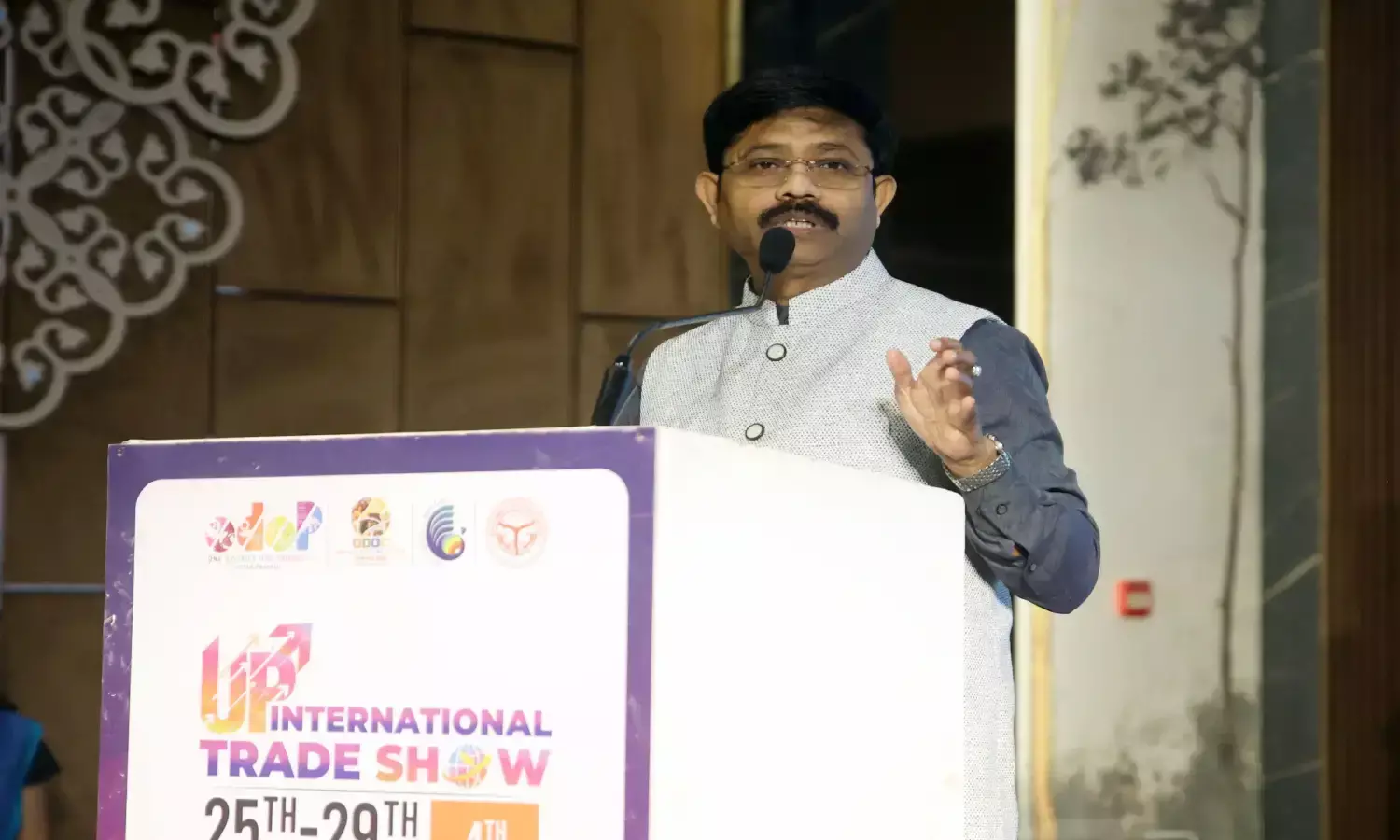
Addressing the ‘From Your Factory to the Front Line’ knowledge session of the UP Defence Industrial Corridor on the fourth day of the UP International Trade Show at the India Expo Mart in Greater Noida, the Minister said that roadshows held in various countries and major cities, combined with continuous dialogue with investors, have boosted international confidence in Uttar Pradesh. He added that the participation of various countries in the UP International Trade Show reflects this growing dialogue and trust.
Minister Nand Gopal Gupta ‘Nandi’ informed that investment proposals worth approximately ₹40,000 crore have been received so far for the six nodes of the UP Defence Industrial Corridor—Lucknow, Kanpur, Jhansi, Chitrakoot, Aligarh, and Agra—and about 1,142 hectares of land have been allocated to various industries.
He stated that the government’s priority is to create a system where investors do not have to run from one office to another with their files. Once an investor arrives in the state, their needs should be understood, and solutions provided through coordination with relevant departments and officials.
‘Government should stand by the investor from arrival until the industry is set up’
Nandi remarked that merely providing land to an investor is not enough. They should also receive support regarding policies, connectivity, infrastructure, testing, technical facilities, and other necessary clearances. He emphasized to officials the need to integrate investor facilitation into office operations and staff conduct. Opportunities for MSMEs and Startups in the Defence Supply Chain
He stated that the defence sector is not merely about manufacturing tanks, missiles, or aircraft. Opportunities exist for industries across the entire supply chain, including precision components, electronic circuits, sensors, batteries, specialized cables, software, technical textiles, advanced materials, packaging, and logistics. He noted that a defence manufacturing ecosystem is being developed across the Lucknow, Kanpur, Jhansi, Chitrakoot, Aligarh, and Agra nodes of the Uttar Pradesh Defence Industrial Corridor. MSMEs, startups, component manufacturers, and technology companies, alongside large industries, can leverage these opportunities.
Connectivity, Law and Order, and Trust: The Foundation of Investment
The Minister emphasized that three factors are crucial for investment: connectivity, law and order, and trust. Improved expressways and transport networks, air connectivity, and industrial infrastructure have expanded business opportunities in the state. He stated that the government aims to make business processes more convenient and reduce unnecessary legal complexities. Relations between industry and the government should be based on cooperation and partnership. Urging investors to engage with the Uttar Pradesh Defence Industrial Corridor and UPEIDA, Nandi remarked that India’s growing defence requirements are creating new possibilities for the state’s industries. He assured that the government stands firmly with investors, making continuous efforts to ensure their investments lead to production, employment generation, and the expansion of technical capabilities within a secure environment.
Box
Assured Demand in the Defence Sector; Opportunities for Every Industry in the Supply Chain: Colonel Sanjay Singh
Retired Colonel Sanjay Singh, CGM of the UP Defence Industrial Corridor, stated that opportunities in the defence sector are not limited to large companies manufacturing tanks, missiles, and aircraft. Instead, industries across various sectors—including precision engineering, electronics, sensors, batteries, specialized cables, software, advanced materials, packaging, and logistics—can become part of the defence supply chain. He stated that demand in the defense sector is not based on market projections like the general market, but rather on the defined requirements of the armed forces; therefore, there are clear market prospects for indigenous manufacturing. He urged industries to assess their existing manufacturing capabilities and identify which defense sector requirements they could fulfill. He noted that an ecosystem is being developed within the UP Defence Industrial Corridor—featuring land, testing facilities, R&D, and investor facilitation—that will enable MSMEs and startups, alongside large industries, to integrate into the defense supply chain.