
SIR Row: CEC Faces a Credibility Test
The Election Commission of India (ECI) is facing a serious credibility challenge. The controversy triggered by a newspaper report alleging that two of the three Election Commissioners had raised concerns over the deletion of names during the electoral roll revision and the handling of the voter database needs to be addressed clearly.
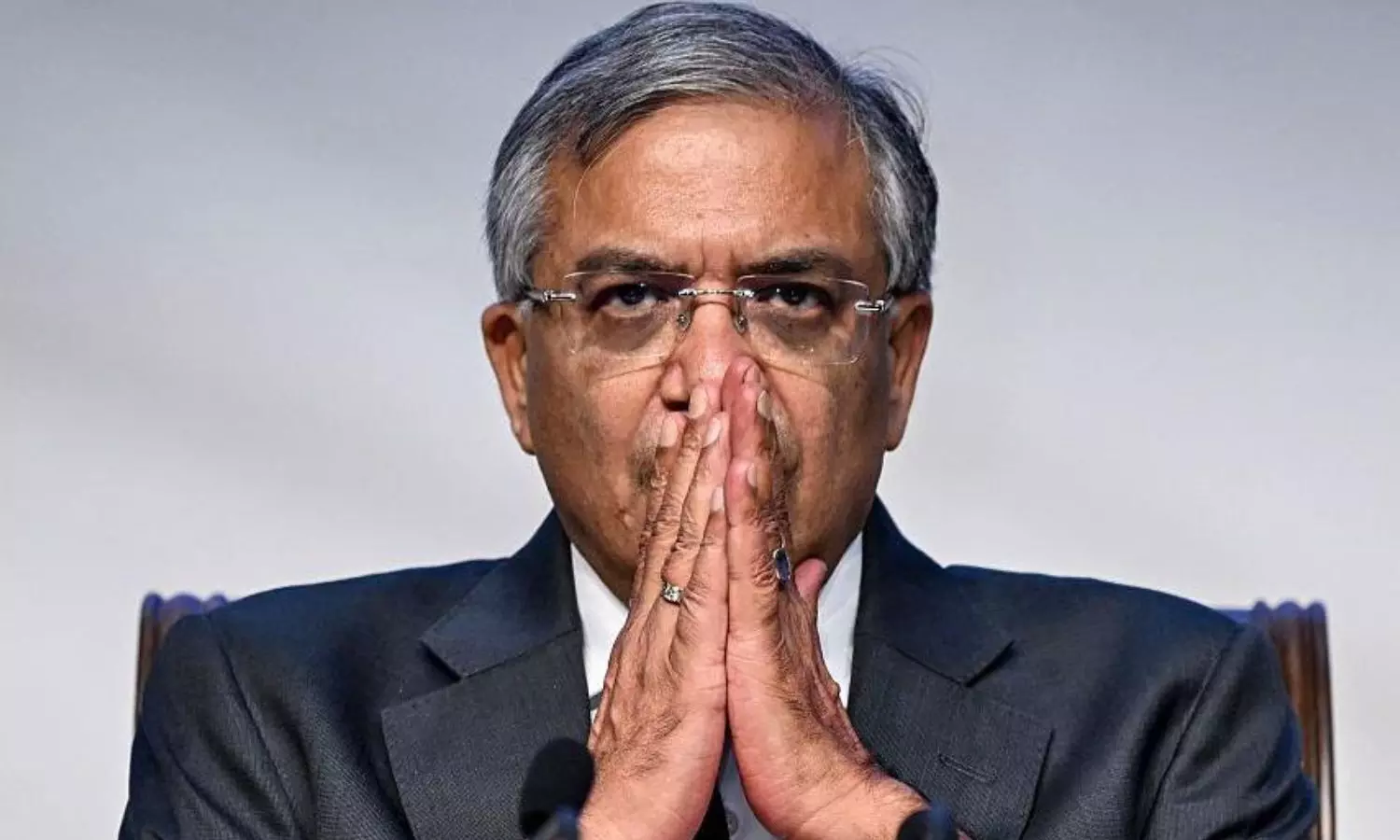
A joint press conference by all three Election Commissioners, explaining the facts and putting to rest the doubts surrounding the reported differences, could go a long way towards restoring public confidence. If the Commission chooses to remain silent, however, questions over its credibility could grow, with the Union Government too inevitably coming under greater scrutiny
Interestingly, BJP leaders too now appear to be of the view that all three Commissioners should jointly hold a press conference and clarify in detail the reported differences over the process of deletion of names during the massive Special Intensive Revision (SIR) exercise.
The Election Commission, however, has rejected the suggestion that the reported differences amounted to a formal institutional dissent, maintaining that differing views and observations are part of internal deliberations and that its final decisions, including those relating to SIR, were taken unanimously.
If the CEC continues to remain silent, it could give further credence to the allegations being levelled by the Congress and other Opposition parties. The Leader of the Opposition (LoP), who held a press conference on Thursday, has already stepped up his attack on the BJP, alleging not only “vote chori” but also “Sanstha chori”. He has said he has been raising the issue for the past three years and claims to have sufficient evidence to substantiate his allegations.
Rahul Gandhi has also described the alleged actions of the Election Commission as an “act of treason.” The Opposition is preparing to move a motion seeking the removal of Chief Election Commissioner Gyanesh Kumar. Reports on Thursday said preparations were under way for such a motion in both Houses of Parliament.
If the CEC continues to remain silent, it could provide further ammunition to the Opposition. It could also give fresh momentum to attempts to bring the fractured INDIA bloc together and create further political embarrassment for the government.
While criticism of the government and the CEC is part of the democratic process, the Opposition too needs to exercise restraint and avoid using highly charged terms such as ““Deshdrohi” against constitutional authorities. Its renewed focus on the issue is understandable as part of its democratic right to question the government and demand accountability but it should not brand anyone as a traitor without evidence.
Rahul Gandhi has also sought to draw a comparison with the speeches of Union Home Minister Amit Shah and Prime Minister Narendra Modi in Parliament and outside, in which Shah said that the BJP would remain in power for the next 30 years. Gandhi argued that there was anti-incumbency against even the “most powerful PM”, Indira Gandhi, within two years.
What he conveniently left out of that comparison was that Indira Gandhi remained in power for nearly 18 years, apart from a brief interruption, and that she imposed the Emergency on June 25, 1975, when her government faced a serious political challenge following a court verdict.
The Emergency fundamentally altered the functioning of India’s constitutional system. Through presidential orders under Article 359, the enforcement of specified Fundamental Rights was suspended. Political opponents were arrested, press censorship was imposed, and civil liberties were severely curtailed. The Constitution itself, however, was not suspended.
Therefore, the comparison between the two periods needs to take into account the full historical context. The assertion that democracy existed throughout the long years of Congress rule but has disappeared now is difficult to reconcile with the experience of the Emergency. At the same time, historical comparisons should be based on documented facts rather than political rhetoric. He also forgets how the AICC president during the emergency, Dev Kant Barooah, said: “India is Indira, and Indira is India”. Political analysts call it political glorification and a personality cult.
The LoP has also said that both Modi and Amit Shah would face trial. Such statements, in the present circumstances, could prove politically counterproductive for the Opposition if they are seen primarily as threats rather than as part of a clearly articulated legal or constitutional course of action.
The immediate issue, however, remains the reported differences within the Election Commission. The Opposition is basing much of its latest offensive on a newspaper report and on material it had placed before the Supreme Court while challenging the SIR exercise. The ECI has disputed the interpretation of the reported differences and has maintained that its final decisions were unanimous. That makes a transparent public clarification by the three Commissioners all the more important.