
Calcutta HC allows Jamiat e Ulema rally in Kolkata with 750-participant cap
Kolkata: The Calcutta High Court on Monday allowed a rally by Jamiat e Ulema on Tuesday, imposing restrictions, while expressing displeasure over the police authority’s refusal to grant permission on Friday evenings, causing the court to sit on weekends. Justice Saugata Bhattacharyya permitted the petitioner and his organisation to hold a rally from Rajabazar to Moulali from 11.30 am to 1 pm on Tuesday, restricting the number of participants to 750.
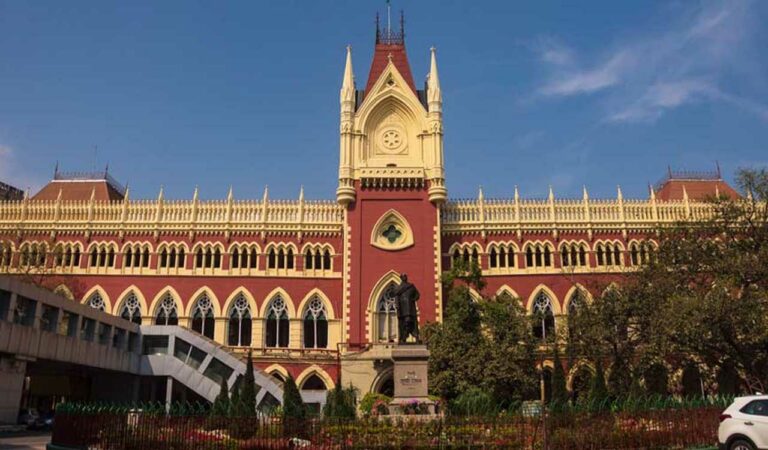
Imposing conditions for holding the rally, the court directed the petitioner to share names and mobile phone numbers of ten volunteers by 10 pm on Monday, who would be responsible for the rally’s smooth execution.
Justice Bhattacharyya also directed that no loudspeakers would be allowed and only handmikes can be used, adhering to decibel norms. The court directed the police authorities to depute adequate personnel to maintain law and order during the rally.
The organisers were directed to ensure that one half of the road they use remains open to vehicular traffic.The court directed that the participants disperse immediately after reaching the end point of the rally at Moulali. Moving the petition, petitioner’s lawyer Sabyasachi Chatterjee stated that the procession, seeking that the workings of the tribunals on the Special Intensive Revision (SIR) of electoral rolls be expedited, is planned for Tuesday and permission for it was denied by the police authority on August 7 evening through an email.
Addressing West Bengal Advocate General Surojit Nath Mitra, Justice Bhattacharyya said, “All intimations declining to grant permission are being communicated on Friday evening, requiring this court repeatedly to sit during the weekend.
“Do not do this,” the Judge told the AG, pointing out that the application for permission to the police authority was made on August 3 and the refusal was communicated at 8.30 pm on August 7, a Friday. “This is being done with oblique motive,” the court said, verbally observing that the authorities could have expressed their view on the issue earlier.
The AG, who appeared on two occasions before this court on a Saturday, said it would have been “helpful” for all of them. “Every weekend this court has to sit for matters relating to meetings,” Justice Bhattacharyya said, observing that the decision could have been taken much earlier.
The AG claimed that facts had been suppressed by the petitioner and that the claims made by him are incorrect. Mitra argued that the rally should not be organised on a weekday as it was planned to be held from Rajabazar to Esplanade in central Kolkata with 2,000 people. The application for permission was made by West Bengal State Jamiat e Ulama, but the petition was filed by a person and not the organisation, the AG stated before the court.
The AG stated that earlier programmes held by this organisation led to disturbances, including brickbatting and injuries to police personnel and damage to police vehicles. Upon Chatterjee claiming that the petitioner is the general secretary of the organisation, the AG stated that the petition had to be made by the organisation itself and by the person in his individual capacity.
On instruction from the government, the AG said that the police suggested that the route of the procession be changed and be held from Garia to Eastern Metropolitan Bypass. The petitioner’s lawyer objected to this proposal. The AG stated before the court that the President’s motorcade had to be diverted owing to disturbances during a rally by this organisation in 2014.
Justice Bhattacharyya said that the proposed route from Rajabazar to Esplanade falls on a busy traffic corridor of Kolkata on a weekday, observing that the route proposed by the state in the southern fringe of the city is also not a viable alternative. During the course of hearing, the state also proposed an alternative route from Hedua to Shyambazar, which the court said is also not appropriate as it also falls on a busy commercial corridor.