
Tamil Nadu’s power grid offers lessons for India’s summer resilience
Bengaluru: Tamil Nadu’s ability to withstand rising summer power demand offers important lessons for other states, economist and Research Director at CDPP Professor Amir-Ullah Khan said during an interaction with reporters.
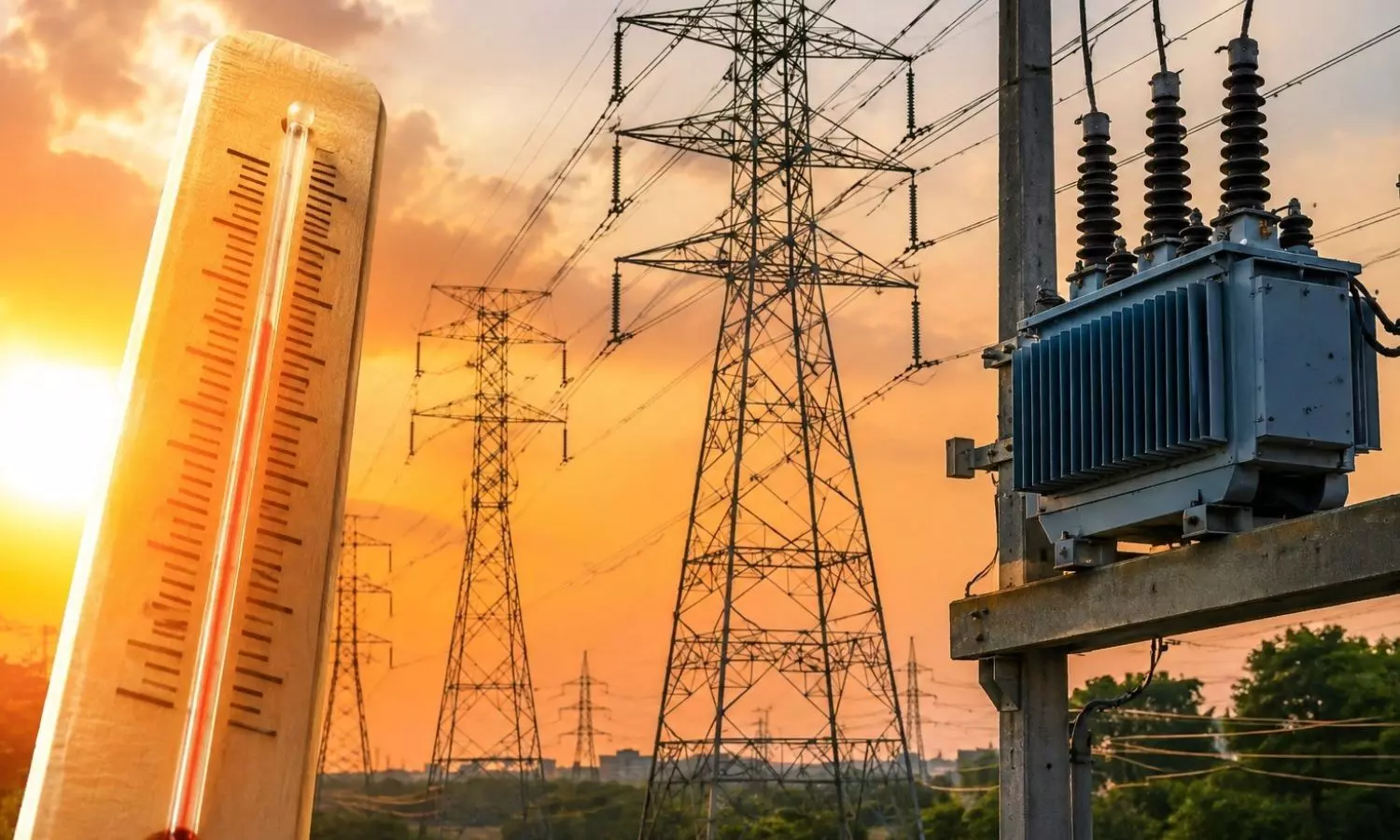
Professor Khan said Tamil Nadu’s power sector performance demonstrates the importance of long-term planning and anticipatory investment. Unlike states that often respond to grid stress only after problems emerge, Tamil Nadu has invested in infrastructure with future demand in mind.
He pointed to the state’s Aggregate Technical and Commercial (AT&C) losses of 10.96%, according to the Ministry of Power’s 14th Integrated Rating and Ranking of DISCOMs for 2024-25. Lower distribution losses improve the financial health of utilities while ensuring that a greater share of supplied electricity reaches consumers.
Tamil Nadu’s per capita electricity consumption is around 1,934 kWh, significantly higher than the national average of 1,460 kWh. Despite this relatively high demand, the state has achieved near-universal electrification and maintained fewer and shorter power outages, including during periods of intense summer demand.
According to Professor Khan, this resilience is the result of investments made over several years in transformer upgrades, network capacity and renewable-energy integration. He said the state had taken the “harder, costlier and wiser” approach of preparing its infrastructure for future requirements instead of relying on crisis-driven measures.
He contrasted this with the challenges faced by Kerala, which has substantial rooftop solar potential and ambitions to expand renewable energy. However, limitations in grid capacity can restrict the amount of additional renewable power that can be absorbed. This, he said, demonstrates why renewable-energy expansion must be accompanied by adequate grid investment.
Professor Khan also highlighted the importance of distribution transformers, describing them as the backbone of the last-mile electricity network. Their thermal tolerance, operational life, reliability and ability to withstand sustained high loads are critical to grid resilience.
With climate variability increasing and peak electricity demand expected to intensify, he said states must focus on infrastructure that can remain reliable over the next 20 to 25 years.
“The lesson from Tamil Nadu is simple: build the grid right the first time and plan for tomorrow’s demand. When the next heatwave arrives, resilience built today will determine whether homes, hospitals and businesses continue to have power,” he said.